
(and When You’re Most Likely to See It)
There is a moment most people have when they first spend time in Morro Bay.
It usually happens without much warning.
You are walking along the harbor, maybe halfway through your first pass down the Embarcadero, when something in the water catches your eye. Not a boat. Not a reflection. Something alive.
You stop. Look a little closer.
An otter, floating on its back, turning slowly with the tide.
After that, everything shifts. You stop scanning the horizon and start paying attention to what is right in front of you.
Morro Bay works like that.
Sea Otters, Every Season
If there is one animal you are almost guaranteed to see in Morro Bay, it is the sea otter.
They live here year-round, often drifting through the harbor in small groups or resting in kelp beds that help anchor them in place. Some stay close to the Embarcadero. Others move farther out depending on tides, boat traffic, and food.
You do not need a tour to find them. Most days, you will see one simply by slowing down and looking into the water.
There is a moment people don’t always expect. If you have ever visited an aquarium, you probably know the feeling. You walk out, look toward the ocean, and quietly hope you might catch a glimpse of something real. An otter. A dorsal fin. Anything.
Morro Bay turns that around.
There is no aquarium here. The harbor is the experience. And more often than not, you are not hoping to see wildlife, you are already looking at it.
A local habit worth adopting. When you see people leaning quietly over the railing, looking straight down, it usually means an otter has settled in below.
Depending on the time of year, there are a couple of places where your odds go up even more. The South T-Pier, just before you reach Great American Fish Company, is one of them. The Morro Rock parking lot on the south side, where the view opens back toward the harbor, is another.
If you are not sure where to look, look for the people. A small group gathered near the edge, smiling and staring into the water, usually tells you everything you need to know.
Mornings tend to offer the clearest view. The water is calmer, the light is softer, and there is less surface disturbance.
They may look relaxed, but they are not there for interaction. Keeping your distance is part of protecting what makes this place special.


Harbor Seals, Sea Lions, and the Sandspit
Across the bay, the long stretch of sand known as the sandspit is where harbor seals tend to gather.
At lower tides, you will often see them stretched out along the shoreline, resting in clusters that blend into the sand until one lifts its head or slides quietly back into the water. From a distance, they can be easy to miss. Then one moves, and suddenly you realize how many are there.
They are present throughout the year, though winter and early spring often bring slightly larger groupings as conditions shift.
Closer to the harbor, the energy changes.
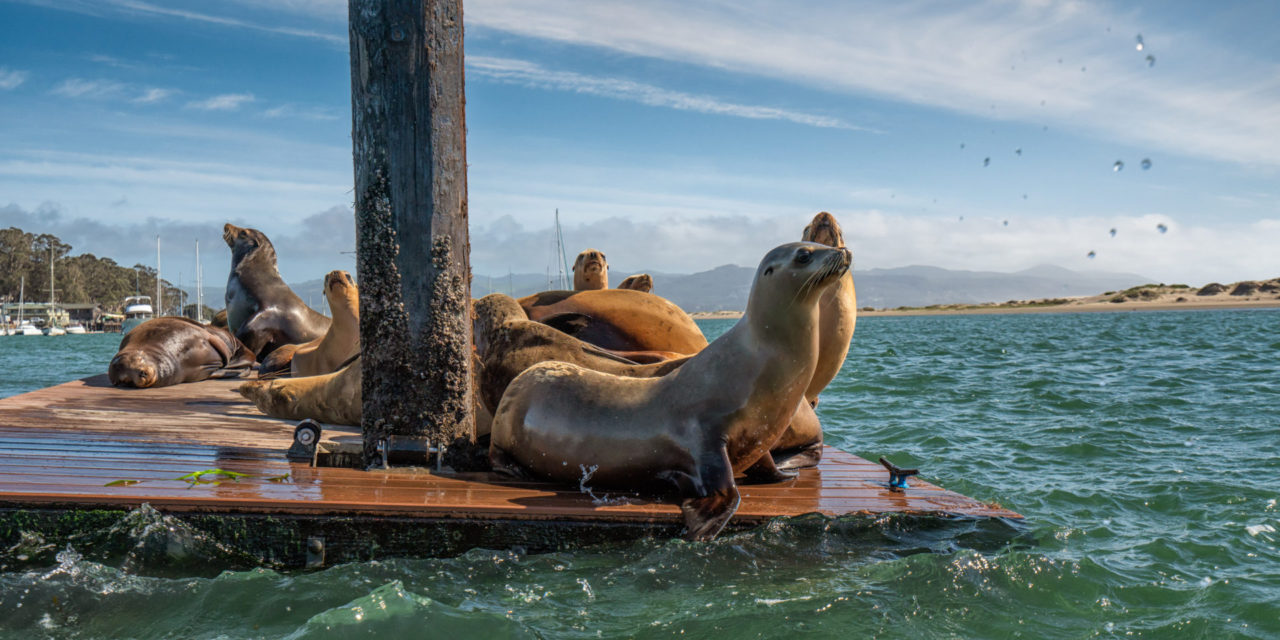
A floating dock not far from the Embarcadero has been claimed, completely and without negotiation, by the local sea lion population. They pile onto it, bark at each other, slide off, climb back up, and generally treat it as their own.
They spend so much time there that a few years ago, the Friends of the Morro Bay Harbor Department stepped in to help maintain it. A community fundraiser helped repair and improve the dock, essentially preserving it as a resting place the sea lions had already chosen.
That same effort led to something else you might notice if you are walking along the harbor. Near the small viewing dock by Hofbrau, a set of permanently mounted binoculars sits facing out toward the water. They are positioned almost perfectly for watching the sea lions, and they get used often.
You will still see sea lions in other places too. On quieter docks, stretched across the backs of anchored boats, or slipping in and out of the water near the harbor.
And then there is the sound.
If you spend any time here, you will hear it. A low, constant chorus that carries across the water. Sea lions barking back and forth, sometimes in short bursts, sometimes rolling on for minutes at a time.
It is there during the day, but it becomes more noticeable in the early morning and again in the evening, when the rest of the harbor quiets down. If the wind is moving in the right direction, you can hear them from across town, long after the light has faded.
From the Embarcadero, the seals feel distant. From the water, everything feels closer.
Either way, the best approach is the same. Watch, listen, and give them the space they have already claimed.


Pelicans and the Movement of the Bay
Pelicans are part of the daily rhythm here.
They travel low over the water in long, coordinated lines, adjusting constantly to wind and current. It looks effortless, but if you watch closely, there is precision in every movement.
You will see them most often along the open stretches of the harbor, especially near the channel where boats move in and out. They tend to follow the same invisible paths, tracing lines across the water that locals come to recognize over time.
Brown pelicans remain in the area year-round, but their activity shifts with the seasons. Late summer and fall often bring more active feeding patterns, when schools of fish move closer to the surface and the birds begin diving more aggressively.
If you spend enough time near the water, you will start to notice their unique personality. A line forming in the distance. A sudden turn. Then a drop and splash.
You will see them more than once.
That does not make it any less worth watching.


Winter Brings the Birds
Bird life in Morro Bay builds quietly through the year, then becomes unmistakable in winter.
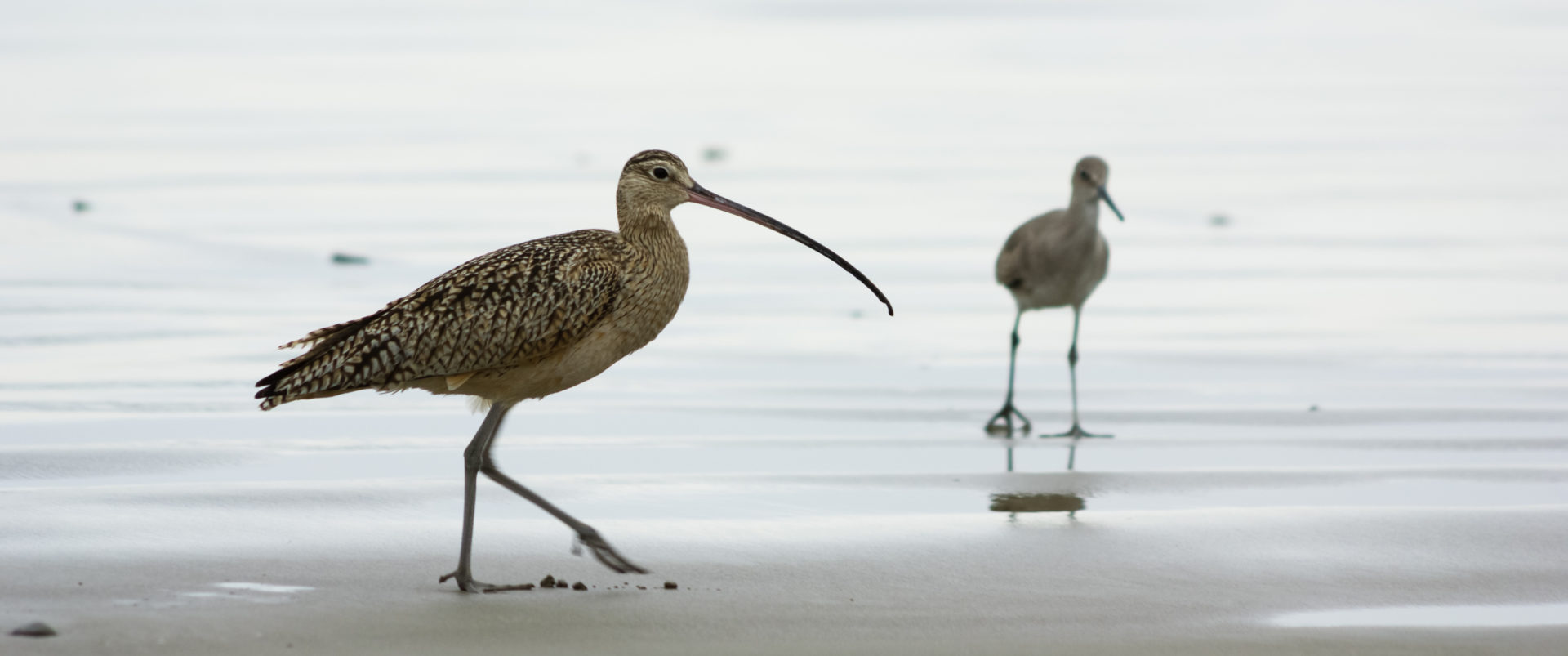
January is when everything sharpens. Migratory birds move through the harbor and estuary in large numbers, filling in spaces that feel quieter during other seasons.
The mudflats near Morro Bay State Park and the edges of the estuary become especially active during lower tides, when feeding areas open up and birds gather in ways that feel almost concentrated.
On the south side of town, near the golf course and campground, the Morro Bay Bird Rookery Natural Preserve offers a different kind of experience. This protected area is one of the most active nesting and roosting sites in the region.
Depending on the season, you may see:
- Great blue herons
- Great egrets
- Snowy egrets
- Double-crested cormorants
- Black-crowned night herons
During nesting season, the rookery becomes especially active, with birds moving constantly between trees, water, and sky. It can look chaotic at first, but there is a rhythm to it once you settle in and watch.
It is also a reminder that Morro Bay is more than a harbor. It is a functioning estuary and protected ecosystem, and places like this are part of what keep it that way.
This is also when the Morro Bay Winter Bird Festival takes place. For a few days, the town fills with people who know exactly what to look for and where to find it.
Even if you are not keeping track of species, you will notice the shift. More movement overhead. More sound carrying across the water. More reason to slow down and pay attention.
Seagulls, Everywhere, and Always Watching
Seagulls are not something you might see in Morro Bay.
They are something you will definitely notice.
They are everywhere. Along the harbor, on the sand, perched on light poles, gathered on Morro Rock in numbers that are hard to count. Hundreds, sometimes thousands.
And they are paying attention.
If you are carrying food, they know. If you set something down, even for a moment, they are already thinking about it.
A local truth. Never leave food unattended. Not on a table. Not on the beach. Not for a second. It is not uncommon to see a french fry disappear mid-meal or a bread bowl claimed before someone is finished with it.
They are not aggressive in the sense that they will confront you, but they are bold, and they are opportunistic.
Trash is another thing to take seriously. If lids are left open or bags are exposed, seagulls will get into them quickly and scatter the contents across sidewalks, streets, and sometimes back into the bay.
There is also a quieter local tip.
If you are walking along the Embarcadero or nearby streets and notice a stretch of sidewalk covered in bird droppings, look up. You are probably about to pass under a favorite perch. Trees, light poles, and rooflines are all fair game.
It is a small thing, but one you only need to learn once.
In the late afternoon, especially when fishing boats begin returning to the harbor, the energy shifts again. Seagulls gather and follow, circling above the boats in large, moving groups.
Around sunset, it is common to see both gulls and pelicans lift into the sky at the same time, moving together in a way that feels less chaotic and more like part of a pattern.
Whether they are heading back to roost or simply following the rhythm of the harbor, it is something worth stopping to watch.


The Quiet Edges of the Estuary
Away from the busiest parts of the harbor, the edges of the estuary tell a different story.
You start to notice it as soon as the noise drops off.
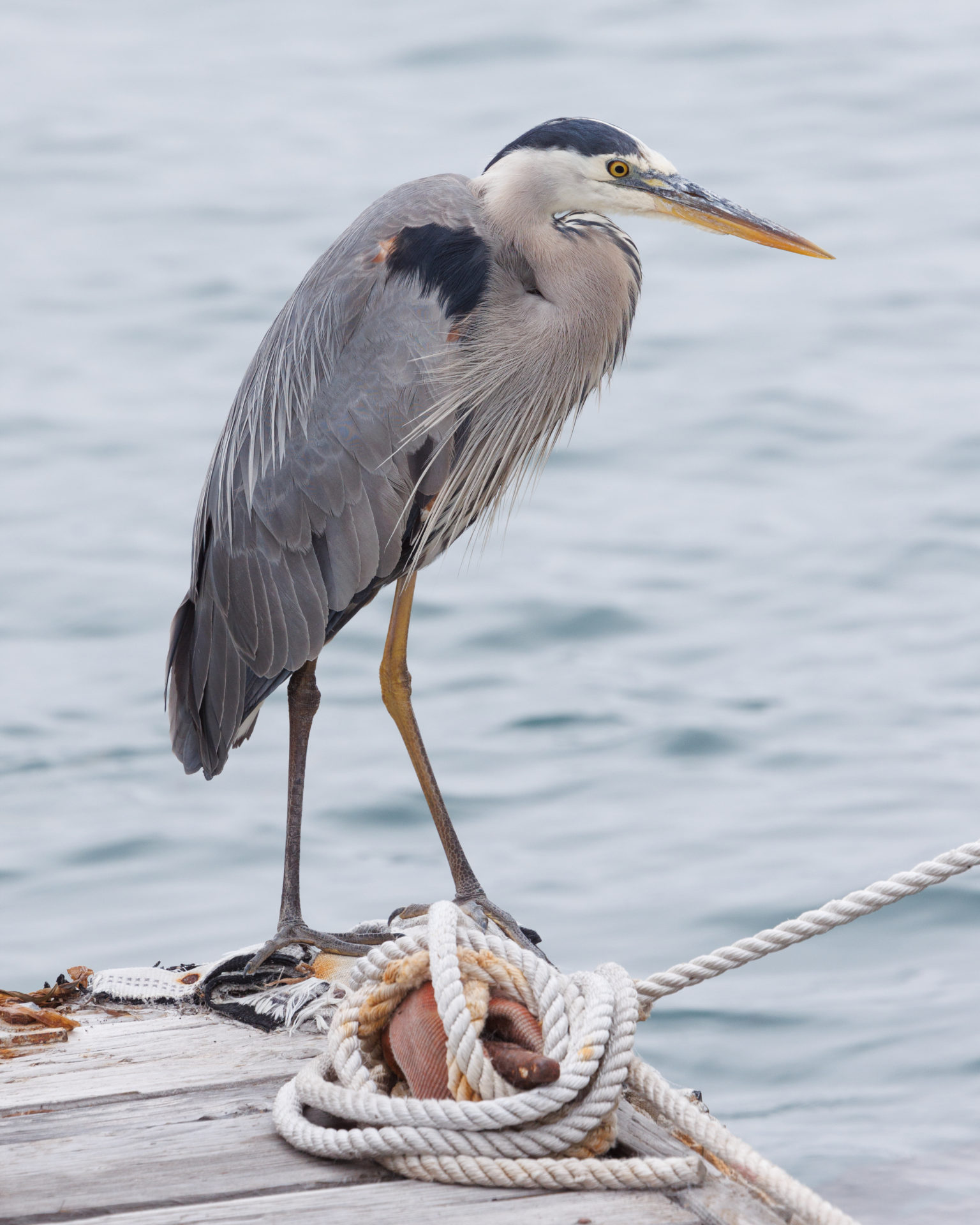
Great blue herons stand motionless in shallow water, waiting longer than most people expect. Snowy egrets move more quickly, stepping through the shoreline with a kind of quiet urgency.
These birds are here most of the year, but they are easier to notice when you step away from the main flow of the Embarcadero.
The boardwalk areas and trails near Morro Bay State Park, along with the quieter stretches near the marina and back bay, are some of the best places to slow down and watch.
There is less distraction there.
And more happening than you first realize.
Snowy Plovers and Protected Seasons
Snowy plovers are easy to miss, which is part of why they need protection.
They typically nest along local beaches in spring and summer, especially in more open stretches of sand where there is very little cover. Areas near Morro Strand State Beach and access points along the sandspit are common nesting zones.
During that time, sections of shoreline are marked off with rope lines and signage.
Those boundaries matter.
The birds blend almost perfectly into their surroundings. Without those protections, most people would walk right past them without ever knowing they were there.
Outside of nesting season, you may not notice them at all.
But when the signs are up, it is worth paying attention.
Whale Migration Just Offshore
Beyond the harbor, the Pacific carries a different kind of movement.
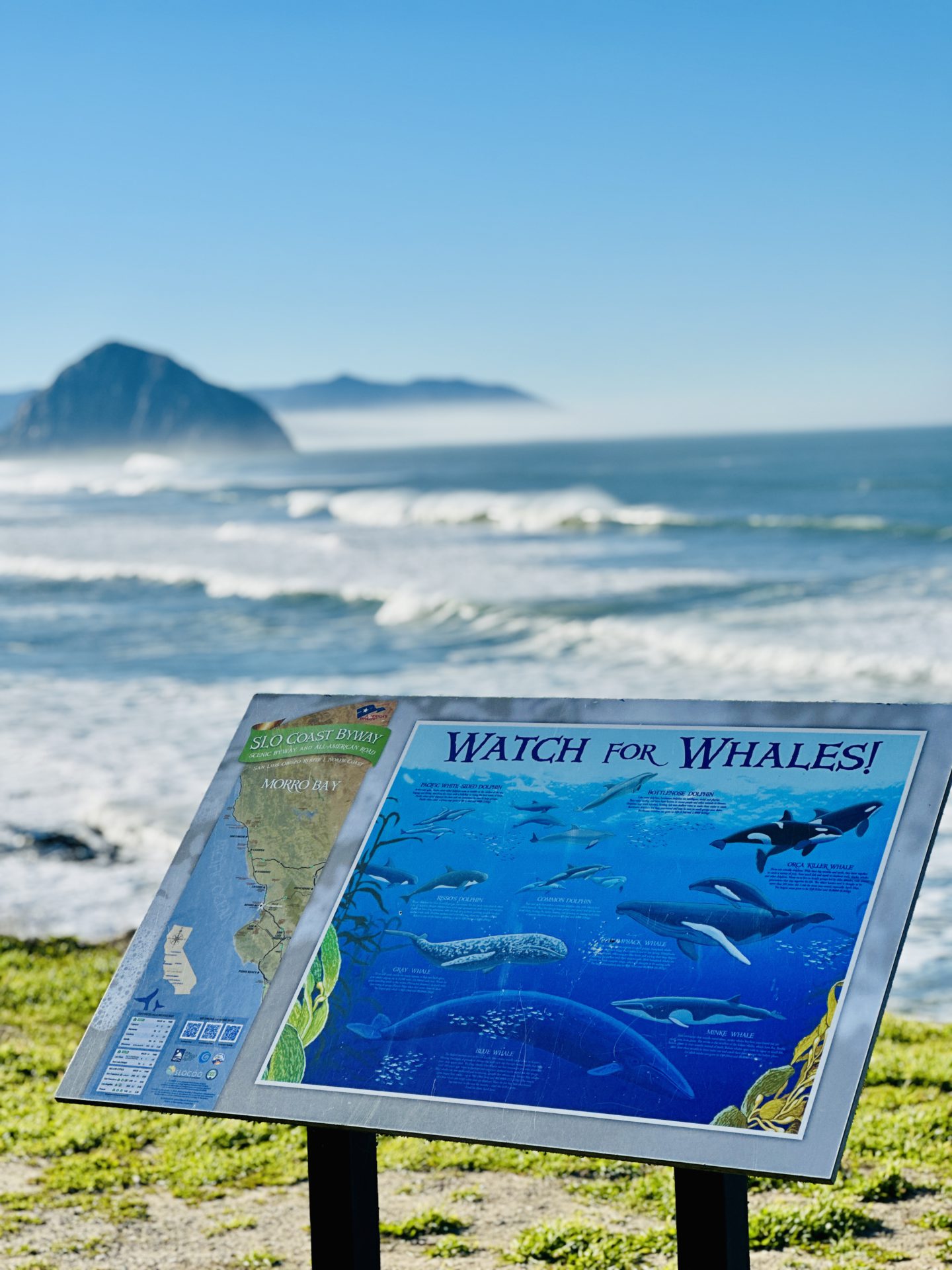
Gray whales pass along this coastline twice each year, following one of the longest migration routes in the world.
Southbound migration typically runs from December through February. Northbound migration follows from March through May.
You are not likely to see whales from the Embarcadero itself, but there are places where your chances improve.
The area around Morro Rock, as well as open coastal viewpoints just north or south of town, can give you a clearer line of sight on calm days. If the water is flat and the air is still, you might catch a distant spout or a slow roll on the horizon.
It is easy to miss if you are not looking.
And hard to forget once you see it.
Rare, but Real
Every now and then, something unexpected shows up.
Orcas have been spotted along the Central Coast. Not often, but often enough that when it happens, people notice.
Certain jellyfish blooms drift into the harbor from time to time, sometimes filling sections of water with slow-moving color that feels almost out of place.
Farther offshore, great white sharks move through these waters as part of a much larger coastal system. You are unlikely to see one, but their presence is part of the reality of this coastline.
These are not things to plan around.
They are reminders that Morro Bay is connected to something much bigger than what you see from the shoreline.
A Simple Wildlife Etiquette Reminder
Around here, people tend to share a quiet understanding when it comes to wildlife.
Give animals space. Especially sea otters. Groups like Sea Otter Savvy encourage keeping a respectful distance, particularly if they are resting or caring for pups.
If you are on the water, avoid approaching directly. Kayaks and paddleboards can feel much closer to animals than you realize.
Do not feed wildlife. It changes behavior in ways that rarely end well.
Respect posted areas. If something is marked off, it is there for a reason.
Move a little slower. Stay a little quieter.
You will see more that way anyway.
When to Go
Wildlife is here year-round, but timing still makes a difference.
Mornings are consistently the best. The wind is lighter, the water is calmer, and the harbor has a kind of stillness that does not last long into the day.
If you are out early enough, you will notice how quiet everything feels before the boats start moving and the day begins to build.
Late afternoons can be just as rewarding. The light softens, the wind settles, and the pace shifts again.
Midday is brighter, busier, and still worth your time.
But if you are hoping to notice more, go early or stay later.
A Place You Share, Not Just Visit
There are plenty of places where you can go looking for wildlife.
Morro Bay is different.
You are not stepping into a separate environment. You are already in it.
It is there while you walk. While you eat. While you stop for a moment longer than you planned.
You are not watching from a distance.
You are sharing the space.
And once you start to see it that way, it becomes hard to experience this place any other way.
About the Author
HelloMorroBay is created by a local team that lives in and around Morro Bay. We spend time here every day, on the water, along the harbor, and out on the trails, paying attention to what makes this place special.
We care deeply about the Central Coast, from its wildlife and working harbor to the small details that most visitors might miss. As ocean and conservation enthusiasts, our goal is simple. Help locals and visitors alike better understand, experience, and appreciate Morro Bay.